
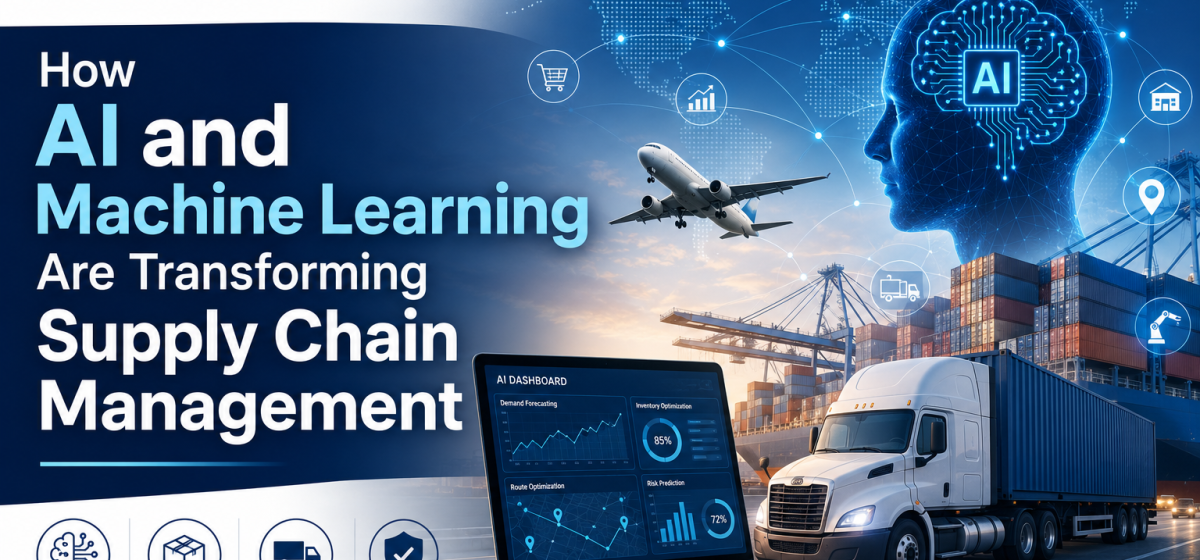
Supply chains today are growing faster, smarter and more data-driven than ever. Many companies are deploying AI and Machine Learning to manage operations, reduce delays and improve decision making across logistics networks.
Did you know? According to the latest industry reports, AI is now considered one of the most disruptive technologies within supply chains, and a significant number of organizations are already leveraging it for planning and operations.
Transglobe Academy offers structured programs to help learners understand modern supply chains and how new technologies are transforming logistics careers. As global trade continues to grow and customer expectations become higher, businesses are increasingly relying on technology to create more efficient and responsive supply chains.
Students who want to build expertise in this field are also exploring advanced programs such as Certificate in Supply Chain Analytics with AI & ML, which combine logistics knowledge with modern data-driven skills.
Blog Objective
This blog explains how AI and machine learning are transforming supply chain management, including their applications, benefits, challenges, and future impact on jobs and operations.
Key Takeaways
- AI is improving forecasting, planning, and decision-making in supply chains
- Machine learning helps analyze large data sets for better accuracy
- Automation is reducing manual work and operational delays
- Real-time tracking is improving visibility across logistics networks
- The future of supply chains will rely heavily on smart technologies
What is AI and Machine Learning in Supply Chain?
Artificial intelligence is the capability of a machine to imitate intelligent human behavior. Machine learning is a part of AI that enables systems to learn from past data and improve over time.
These technologies are used in supply chain management to:
- Predicted demand
- Inventory management
- Optimise delivery routes
- Identify risks sooner
That’s why so many students looking into possible careers today are also looking at fields related to data and logistics.
Why AI is Becoming Important in Supply Chains
The global nature of operations, online shopping and demands for quick delivery have made supply chains more complex. Manual management of such systems is difficult.
Here’s why companies are adopting AI:
- Real-time data for quicker decision-making
- Less human mistakes in planning
- Enhanced response to supply chain disruptions
- Better coordination of different stages
Reports say that around 67% of organizations now feel confident using AI to make decisions about their supply chains.
Main Uses of AI in Supply Chain Management
1. Predicting demand
AI examines historical sales, trends and external factors to forecast future demand. This reduces the overstock and shortages.
2. Inventory Management
Systems automatically monitor inventory levels and make sure products are available when needed.
3. Planning a Route
AI is used by logistics companies to calculate the fastest and most efficient routes for delivery, saving time and fuel.
4. Automation of Warehouses
Storage, picking and packing processes are performed using Robotics and AI systems.
5. Control of risk
AI can spot potential delays, supplier problems or disruptions before they occur.
These applications demonstrate the use of AI in supply chain optimization in real-world operations.
How AI is Changing Supply Chain Management
Logistics decision-making is being transformed by technology. In the past, most planning was done by hand and experience. AI tools analyze big volumes of data today in seconds.
Some of the major changes are:
- Live tracking of shipments
- Automated decision-making systems
- Better coordination between distributors and suppliers
- More rapid response to shocks
That is why AI is transforming supply chain management to be more efficient and responsive.
Benefits of AI in Supply Chain
- Less delays & shorter delivery time
- Better planning accuracy
- Reduced operating costs
- More satisfied customers
- All operations visible in real time
Companies that use AI can react to changes quickly and improve overall performance.
Challenges of Implementing AI
Despite its advantages, AI also comes with challenges:
- High cost of setup and implementation
- The demand for skilled professionals
- Integration problems with legacy systems
- Issues with data quality
According to industry surveys, more than half of companies struggle with integrating AI into existing systems and lack skilled talent.
Role of Machine Learning in the Logistics Industry
Machine learning is used to improve logistics operations by analyzing patterns and predicting outcomes.
It is used to:
- Estimated delivery time
- Improved Demand Forecasting
- Supply chain process error detection
- Warehouse operation optimization
This emphasizes the role of machine learning in the logistics industry, especially in improving accuracy and efficiency.
Impact of AI on Supply Chain Jobs
- AI is changing job roles rather than removing them completely.
- Routine tasks are becoming automated
- New roles are emerging in data analysis and system management
- Workers need to learn new skills related to technology
Studies show that organizations are focusing more on upskilling employees as AI becomes part of daily operations.
Future of AI in the Supply Chain Industry
- The future looks highly technology-driven.
- Supply chains will become more automated
- AI systems will make real-time decisions
- Disruptions will be handled faster
In fact, experts predict that up to 60% of supply chain disruptions could be resolved without human involvement in the coming years.
This clearly shows the future of AI in the supply chain industry is focused on automation and efficiency.
Skills Required for AI-Driven Supply Chains
- To work in this field, students should focus on:
- Ability to analyze data
- Understanding the logistical system
- Familiarity with Basic Tech Tools
- Ability to solve problems.
Some learners also explore fields like aviation career opportunities after 12th or an aviation diploma course in Kerala to understand how logistics and aviation operations are interrelated.
Courses That Help Build Careers in This Field
Students can select different learning pathways:
- Logistics and Supply Chain Programs
- Analytics & Data Courses
- Industry based training modules
Many learners are also looking for a Diploma in Aviation or the best aviation academy in Calicut to get a foundation in operations and management.
At the same time, certifications like Supply chain analytics certification India are gaining attention among students who want to work with data, automation, and smart logistics systems.
Transglobe Academy offers programs that allow learners to understand the traditional logistics and modern technology trends.
Conclusion
AI and Machine Learning are changing the way supply chains work, making them faster, more precise and more productive. These innovations are allowing companies to upgrade every aspect of their operations from demand forecasting to real-time tracking.
These changes are important for students who want to pursue a career in logistics and supply chain management. Transglobe Academy helps learners through structured programs that focus on industry relevant skills and real world knowledge.
If you want to stay ahead in this changing industry, now is the time to start learning and developing skills that are aligned with the future of supply chain management.
Frequently Asked Questions:
Q1. What is AI for the supply chain?
AI is used in supply chains to analyze data, automate processes, and improve decision making.
Q2. How do you use machine learning in logistics?
It helps in demand prediction, route optimization and operational efficiency improvement.
Q3. Is AI stealing supply chain jobs?
No, it is changing roles and creating new opportunities in technology driven areas.
Q4. What are the advantages of AI in logistics?
Some of the key benefits include: faster delivery, lower costs, and better planning.
Q5. How to jumpstart a career in an AI-driven supply chain?
Start with logistics or supply chain courses and build skills in data and technology.