
Have you ever wondered how companies manage product deliveries during busy shopping seasons and ensure items reach customers on time? Behind every successful supply chain, there are multiple processes such as demand forecasting, inventory planning, transportation management, and data analysis working together.
With the growth of e-commerce and global trade, businesses are increasingly using technology to improve supply chain operations and make better decisions. Transglobe Academy helps learners understand modern supply chain concepts and industry developments through career-focused programs designed to build relevant skills.
A Certificate in Supply Chain Analytics with AI & ML helps students explore how artificial intelligence, data analytics, and machine learning are influencing supply chain processes. Understanding these technologies can help aspiring professionals prepare for the changing requirements of the logistics and supply chain industry.
Key Takeaways
- AI helps businesses improve supply chain planning, forecasting, inventory management, and daily operations.
- Modern supply chains use data and technology to improve decision-making and manage complex processes.
- Machine learning helps companies identify patterns and make better predictions using historical information.
- Knowledge of AI and analytics is becoming valuable for professionals working in logistics and supply chain roles.
- Learning modern supply chain technologies can help students prepare for new career opportunities in a growing industry.
What Is AI in Supply Chain Management?
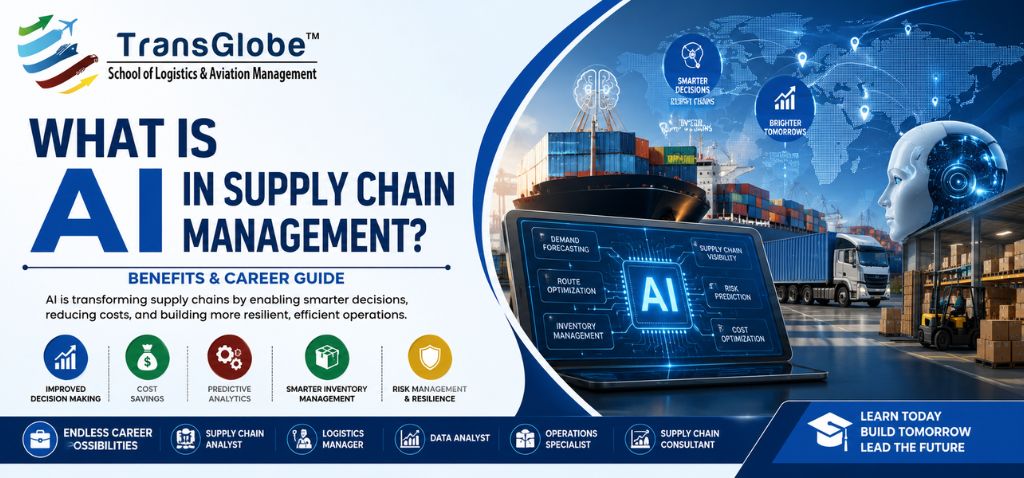
Artificial Intelligence (AI) is the technology that assists computers in analyzing information, finding patterns and decision making. In the context of a supply chain, AI can assist in making data-driven decisions for planning, inventory control, transportation, and warehouse tasks.
Artificial Intelligence in Supply Chain Management involves leveraging AI systems to process data and make predictions. For example, businesses can study previous sales records to predict product demand, maintain suitable inventory levels, and improve supply chain planning.
AI can also be used to gain insight into customer behavior, such as market trends and customer buying habits.
It is suitable to use for regions like:
- Demand forecasting to predict customer requirements
- Inventory management to keep stock levels up to date
- Moving goods from one place to another by planning routes for delivery.
- To organise activities at the warehouse.
- The supplier management process for reviewing performance.
As supply chains become more technology-focused, professionals with knowledge of AI and business operations can explore new career opportunities across industries.
How Does AI Work in Supply Chain Management?
The process of AI involves gathering and processing data from various stages of the supply chain, such as sales transactions, inventory management, logistics and transportation, order management, supplier information, and customer orders.
AI tools study this information to identify patterns and provide insights that help businesses improve their operations and respond to changing market needs.
The process generally includes:
Data Collection
AI systems gather data on customer demand, stock levels, delivery history, supplier operations, and more. This data is valuable for gaining insights into trends and making informed decisions about business operations.
Data Analysis
AI can sift through the collected data to uncover trends in customer behavior, product demand and supply chain performance. This facilitates businesses to identify areas in which improvements can be implemented.
Decision Support
AI provides insights that help teams make decisions related to inventory planning, transportation, and supply chain activities.
AI supports supply chain professionals by providing useful information, while human knowledge remains important for managing operations and making final decisions.
Role of Machine Learning in Supply Chain Operations
Machine learning is a part of artificial intelligence that helps systems learn from previous data and improve predictions over time. In supply chain management, it helps businesses identify patterns, improve planning, and make better decisions.
Machine Learning in Supply Chain is used in areas such as:
- Forecasting sales from past sales data
- Identifying possible transportation delays
- Improving inventory planning
- Analyzing supplier performance
For example, businesses can use machine learning to study purchasing patterns and predict future requirements. This assists supply chain teams in resource management and in making improved plans. Professionals who want to build expertise in these technologies can benefit from pursuing an advanced diploma in supply chain management, which combines core supply chain concepts with emerging technologies like machine learning and data analytics.
Experts with knowledge of machine learning and supply chain processes can pursue careers in logistics, analytics, and business planning.
AI Applications in Supply Chain Management
AI is being applied in various facets of supply chain operations to enhance planning and decision-making processes. Technology can support businesses with forecasting, delivery management, and all other processes that occur on a daily basis.
AI can be used in the supply chain to:
1. Demand Forecasting
AI analyzes sales data, market trends, and customer behavior to predict future demand. This assists businesses to keep proper stock levels.
2. Inventory Management
AI can track stock and determine stock needs. This helps minimise problems of surplus stock or shortages of products.
3. Warehouse Operations
For warehouse teams, AI can assist with product tracking, inventory planning, and order management, enhancing efficiency in warehouse operations.
4. Transportation Planning
AI analyzes routes, traffic conditions, and delivery schedules to improve transportation planning and reduce delays.
5. Supplier Management
Businesses use AI tools to study supplier performance and improve coordination across supply chain activities.
Benefits of AI in Supply Chain Management
Businesses are adopting AI technologies to improve supply chain operations and make better use of available data.
AI’s advantages in the supply chain consist of:
- Data analysis and better demand forecasting.
- Improved stock control and management.
- Quick decision-making with real-time information
- Improved transportation planning
- Improved visibility of the activities that take place in the chain.
AI helps teams understand operational challenges and identify areas where improvements can be made. However, supply chain professionals still have a critical role to play in process management and business decisions.
How AI Is Changing Supply Chain Careers
AI is unlocking fresh job opportunities for people with the expertise of both supply chain and technology. Modern roles now require knowledge of analytics, digital tools, and business processes.
Some career options include:
- Supply Chain Analyst
- Demand Planning Specialist
- Logistics Data Analyst
- Inventory Planning Executive
- Supply Chain Technology Specialist
Professionals with AI and analytics knowledge can explore opportunities across industries such as manufacturing, retail, healthcare, e-commerce, and logistics.
Courses to Learn AI and Supply Chain Analytics
Students with an interest in the use of technology in their supply chain career can learn more about the various programs available based on their educational level and career objectives.
A PG diploma in supply chain management equips students with knowledge of various aspects, including logistics operations, inventory management, procurement, and transportation. These concepts provide a solid basis for understanding the role of technology in today’s supply chain activities.
Students can gain insights into the role of technology, particularly AI, machine learning, and data analytics, in optimizing supply chain planning and decision-making processes in businesses.
Career goals and interests can guide learners to select the learning program that can prepare them for future opportunities in the rapidly changing supply chain industry.
Skills Required to Build a Career in AI-Based Supply Chain Management
There is a need for understanding business processes, technology and data analysis in the context of AI-related supply chain management. Learners and practitioners wishing to pursue a career in this sector will be able to acquire employable skills to meet current industry requirements.
Important skills include:
- Understanding supply chain processes such as procurement, inventory, transportation, and logistics
- Familiarity with basic Data Analysis skills and tools.
- Knows how to recognize patterns and interpret business information
- Know how to solve problems when faced with operational issues.
- Coordinating skills to communicate with various teams
Professionals who learn about AI and analytics can begin to grasp the potential for technology in the supply chain. These skills can help students qualify for jobs related to supply chain operations, planning and analysis.
Is AI a Good Career Skill for Supply Chain Professionals?
The industry of supply chains is evolving to be more technologically driven, which leads to opportunities for those who are familiar with both business processes and technology.
Learning AI-related concepts can help professionals explore careers in areas such as:
- Supply chain analytics
- Demand planning
- Logistics management
- Inventory control
- Business operations
Students with knowledge of analytics, technology, and supply chain processes can prepare for roles that require data-based decision-making and operational skills.
Build Your Future in AI-Based Supply Chain Management
Explore AI, analytics, and supply chain concepts to develop industry-ready skills. Transglobe Academy helps learners understand modern operations and prepare for evolving career opportunities in logistics and supply chain management.
Conclusion
Artificial intelligence is changing the way businesses manage supply chain operations by improving forecasting, inventory planning, transportation management, and decision-making. Understanding how AI works and where it is used can help students and professionals prepare for the changing needs of the supply chain industry.
Understanding technologies like machine learning and analytics can help be a part of the logistics, supply chain planning, and business operations. Programs focused on modern supply chain skills can help learners gain knowledge about current industry practices and prepare for future opportunities. The Certificate in Supply Chain Analytics with AI & ML can assist students in grasping the impact of data, analytics, and new technologies on today’s supply chain.
Transglobe Academy helps learners understand supply chain concepts along with emerging technologies that are influencing the industry. Building skills in supply chain management and analytics can help students move toward professional roles in this growing field.
Ready to develop the skills required for the future of supply chain management? Explore Transglobe Academy’s industry-focused programs today and start your journey toward building expertise in AI, analytics, and modern supply chain operations.
Frequently Asked Questions :
Q1. What is Artificial Intelligence in Supply Chain Management?
Artificial Intelligence in Supply Chain Management is the application of smart technologies to process data, see patterns and make decisions about supply chain management, logistics, inventory and transport. AI aids in data-driven planning for businesses and managing operations.
Q2. How is AI used in supply chain management?
In the realm of supply chain management, AI can be leveraged for tasks like demand forecasting, inventory management, warehouse optimization, transportation planning, and supplier analysis. These applications are used to make processes better and to be more efficient with resources in the company.
Q3. What are the benefits of AI in supply chain management?
AI in Supply Chain Management brings numerous benefits, such as enhanced forecasting capabilities, better inventory management, quicker decision-making, and increased visibility in supply chain operations. AI technology enables businesses to extract value from data and make smarter process decisions.
Q4. How does machine learning help supply chain professionals?
Machine Learning in Supply Chain assists professionals to analyze past data, discover trends, and enhance predictions. It can identify patterns from the available data to assist in the planning, management of inventory, and making transportation decisions.
Q5. Which course can help me learn AI in supply chain management?
For students interested in understanding AI and the supply chain analytics, they can delve into courses focusing on technology, data analysis, and supply chain operations. A Certificate in Supply Chain Analytics with AI & ML can help learners comprehend the applications of AI & ML in the contemporary supply chain.