
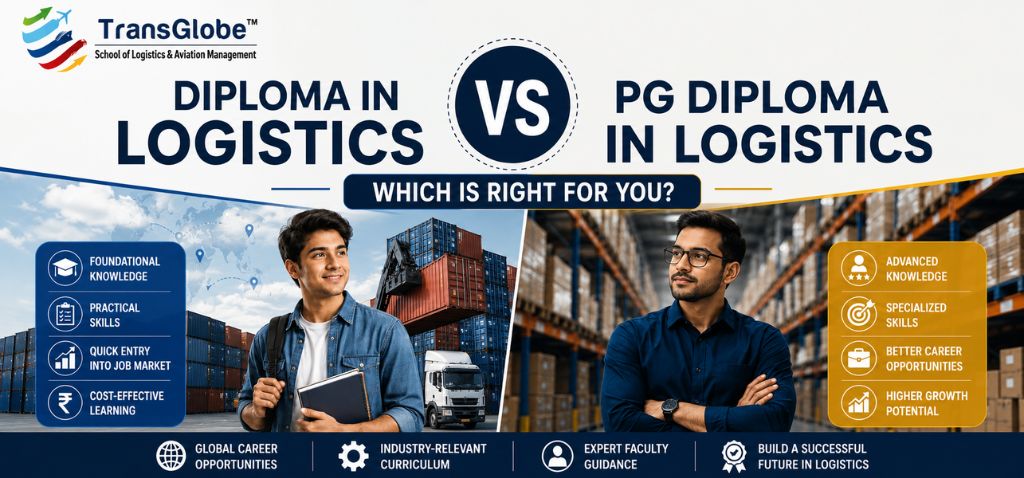
The logistics industry in India is growing rapidly due to e-commerce expansion, global trade, and increasing demand for supply chain professionals. With the growing interest in vocational courses, a lot of students get confused whether they choose post graduate diploma in logistics or diploma course.
After completing 12th grade, students interested in starting their career in the logistics field and acquiring operational skills usually opt for a Diploma in Logistics Management. Post graduate programs generally cater to logistics and supply chain professionals who wish to pursue further studies for higher level positions.
Transglobe Academy provides industry specific training courses for learners to gain an understanding of logistics operations, warehousing, transport systems and supply chain management. Companies are still expanding their logistics infrastructure, which means it offers long-term employment opportunities for both freshers and graduates.
Blog Objective
This blog breaks down the differences between diploma and post-graduate diploma courses in logistics, as well as what students are expected to learn, how long they take, the career opportunities that come with each, salary expectations, and a few tips on choosing the right course for the right student.
Key Takeaways
- Logistics courses are offered for both 12th pass students as well as graduates.
- Diploma programs emphasize operational and entry-level logistics skills.
- PG diploma programs prepare students for supervisory and management roles
- There are some differences between the two programs in course length, qualification, and employment prospects.
- Logistics and supply chain are the area where career growth is strong in India.
- The selection of a course will be based on your educational background and career goals.
What is a Logistics Diploma Course?
A logistics diploma course is created to serve students looking to be in the logistics and supply chain sector after graduating from 12th standard. These courses are designed to cover the basics of transportation, warehousing, inventory and freight handling.
Students studying for a Diploma in logistics and supply chain management gain knowledge of concepts taught in the classroom as well as industry related operations.
Common Topics Covered:
- Warehouse operations
- Transportation systems
- Inventory control
- Freight management
- Supply chain basics
These courses help students build job-ready skills for entry-level positions in logistics companies, warehouses, shipping firms, and distribution centers.
What is a PG Diploma in Logistics?
A post-graduate course in logistics is tailored for graduates seeking to build further knowledge in the field of logistics operations and supply chain management. Diploma programs focus on the planning, coordination, operations management, and business systems, in comparison to these courses.
A lot of students opt for pursuing a PG Diploma in logistics to enhance their career prospects and advance to better paying jobs in this sector.
Programs such as PGDM in logistics and supply chain management often include case studies, operational analysis, and management-focused subjects that prepare learners for leadership positions.
Difference Between Diploma and PG Diploma in Logistics
Many students do a comparison before choosing which of the two programs to follow. Knowing the difference between a diploma and a PG diploma will allow learners to select a course that is appropriate for them in terms of their educational attainment and career aspirations.
| Feature | Diploma Program | PG Diploma Program |
| Eligibility | 12th Pass | Graduation |
| Course Level | Beginner | Advanced |
| Focus Area | Operational Skills | Management & Planning |
| Career Level | Entry-Level Roles | Supervisory & Management Roles |
| Salary Growth | Moderate Starting Salary | Better Long-Term Growth |
| Learning Style | Basic Industry Skills | Advanced Business Operations |
Both programs offer career opportunities in logistics and supply chain industries, but the right choice depends on the student’s qualifications and future goals.
Duration of Logistics Diploma Course
The Duration of the logistics diploma course varies from one institution to another and according to the structure of the course. Diploma programs take 6 months to 1 year and postgraduate diploma programs may take up to 1 to 2 years.
Some institutes also include internships or industrial training as part of the curriculum. It enables students to experience authentic logistics activities prior to entering the workforce.
For students who wish to acquire skills in logistics systems and warehouse management in a shorter period, short-term certifications are also offered.
Which Course Is Better After 12th?
Diploma-level logistic studies are often favored by students who have recently graduated from school since they offer quicker entry into the industry.
Benefits for 12th-Pass Students:
- Early career opportunities
- Industry-focused learning
- Shorter course duration
- Entry-level logistics jobs
- Skill development before employment
A Diploma in logistics can help freshers start working in warehouse operations, transportation coordination, freight support, and inventory handling.
Which Course Is Better for Graduates?
Postgraduate logistics courses are often selected by graduates seeking enhanced salaries and career progression opportunities to management level. These courses offer a more detailed knowledge of logistics systems, business coordination and supply chain planning.
Advanced programs are chosen by students who are aiming towards careers in logistics management in the long term because companies value the graduates for their supervisory skills.
It depends on the student’s preference for either early employment or advanced career growth opportunities.
Career Opportunities After Logistics Courses
Diploma or postgraduate diploma courses will result in employment in logistics and supply chain roles.
Career Options in Diploma Courses:
- Warehouse Assistant
- Logistics Coordinator
- Freight Executive
- Inventory Assistant
- Transport Coordinator
Career Roles After PG Diploma Programs:
- Supply Chain Analyst
- Operations Executive
- Procurement Officer
- Logistics Supervisor
- Warehouse Manager
The logistics industry continues to create opportunities in e-commerce, retail, shipping, transportation, and manufacturing sectors.
Skills You Learn in Logistics Programs
Logistics courses are technical and operational based and are relevant to the skills that companies are searching for when recruiting.
Important Skills Include:
- Communication and coordination
- Inventory planning
- Warehouse management
- Transportation handling
- Problem-solving ability
- Knowledge of supply chain operations
Many students also explore a second diploma in logistics management program or certification course later to improve specialization and career growth.
Is Logistics a Good Career in 2026?
Online shopping, international trade, and the expansion of the supply chain will drive logistics activities in the coming years. There is a growing need for proficient employees in the fields of logistics, warehousing, and digital logistics platforms, as companies invest in warehouses, transportation networks, and digital logistics solutions.
Those who develop industry expertise at a young age have the opportunity to work in fields such as logistics operations, supply chain management, transportation coordination, inventory systems and warehouse management.
This growth has made the logistics sector one of the fastest rising fields for both students and graduates in India.
Courses That Help Build Careers in Logistics
There are various ways to learn for a logistics career depending on educational background and career goals.
Some popular learning options include:
- Logistics Diploma Programs
- Postgraduate logistics programs
- Supply chain certifications
- Industry-focused logistics training
Transglobe Academy offers a structured logistics learning program, covering the theory of warehousing, transportation systems, inventory and supply chain processes, all involving industry based learning.
Build Your Future in Logistics Today
Step into the fast-growing world of logistics and supply chain management with industry-focused training, real operational knowledge, and career-ready skills designed for modern logistics careers at Transglobe Academy.
Conclusion
A diploma and a post-graduate diploma in logistics can be compared based on qualification, career objectives, and future employment. Diploma courses are best for students after 12th grades who are looking for an early career start, while postgraduates diploma courses are more appropriate for students who are graduates and are after management level opportunities.
By learning the structure of the course, its length and what jobs they can get at the end, students make better decisions about their future. Transglobe Academy works with students by providing industry-focused training programs that help to develop skills needed for the modern logistics and supply chain career.
Looking to begin your logistics and supply chain career? Discover career-oriented courses, develop industry-ready skills and get ready for an expanding logistics industry with Transglobe Academy.
Frequently Asked Questions:
Q1. What is the difference between a diploma and a PG diploma in logistics?
The former, a diploma program, is for students who have completed their 12th pass and the latter, a postgraduate diploma, is for graduates who wish to acquire deeper knowledge of logistics.
Q2. Can I join logistics courses after 12th?
Yes, there are many diploma programs at the level of Logistics that can be taken after 12th standard.
Q3. Is it better to have a diploma or a PG diploma in logistics?
This will depend on your learning experience and aspirations. Diploma programs are designed for beginners, and PG diploma programs provide for advanced employment options.
Q4. How long are logistics diploma courses?
The duration of a logistics diploma program varies, but is typically between 6 months and 1 year, depending on the specific program and its delivery format.
Q5. Is Logistics a good career path in India?
Logistics has seen a rise in opportunities as a result of the rising demand in industries such as e-commerce, transportation, and supply chains.